










Definition and objectives of the QSE approach

Faced with economic, social, and environmental challenges, companies must review their organizational structure in order to remain competitive and responsible. In this context, the QSE (Quality, Safety, Environment) approach has established itself as a structuring management framework. It makes it possible to reconcile economic performance, risk reduction, and compliance with standards, while strengthening the confidence of customers, partners, and employees.
QSE is not limited to a series of procedures: it is a genuine strategic approach that transforms the way an organization anticipates risks, protects its employees, and reduces its impact on the environment.
Contents
Definition of QSE: Quality, Safety, and Environment
The Quality dimension: customer satisfaction and continuous improvement
Visit quality aims to ensure that products and services meet customer expectations and regulatory requirements. It is based on controlled processes, rigorous controls, and a culture ofcontinuous improvement. Main objectives:- Enhance customer satisfaction and loyalty.
- Reduce non-compliance and associated costs.
- Encourage innovation and operational efficiency.
Safety: risk prevention and worker protection
Safety in the workplace is a top priority. The QSE approach focuses on preventing workplace accidents and occupational illnesses.
This involves:
- Risk identification and assessment.
- The implementation of appropriate prevention plans.
- Awareness-raising and ongoing training for employees.
Good safety management not only improves employee health but also reduces costs associated with work stoppages and boosts motivation within teams.
The environmental dimension: reducing the ecological impact of businesses
The environmental aspect of QSE commits companies to reducing their carbon footprint and adopting sustainable practices.
This includes:
- Waste management and reducing energy consumption.
- Controlling greenhouse gas emissions.
- The adoption of technologies and processes that are more respectful of the planet.
To go further, some organizations rely on recognized sectoral frameworks, such as the GLEC (Global Logistics Emissions Council), which offers a harmonized methodology for measuring and reducing emissions related to transportation and logistics activities.

How to sustain and strengthen your business through a successful low-carbon trajectory.
Why do companies adopt a QSE approach?
Risk reduction and regulatory compliance
QSE helps anticipate and control risks, whether they relate to product quality, workplace safety, or environmental impact. It also ensures compliance with applicable laws and regulations.
Improving organizational performance
By integrating QSE, companies optimize their processes, reduce costs, and improve productivity. This translates into better overall performance.
Contribution to CSR commitments
QSE is part of a broader approach to corporate social responsibility (CSR). It promotes sustainable development and helps to strengthen the company's credibility and image among its stakeholders.
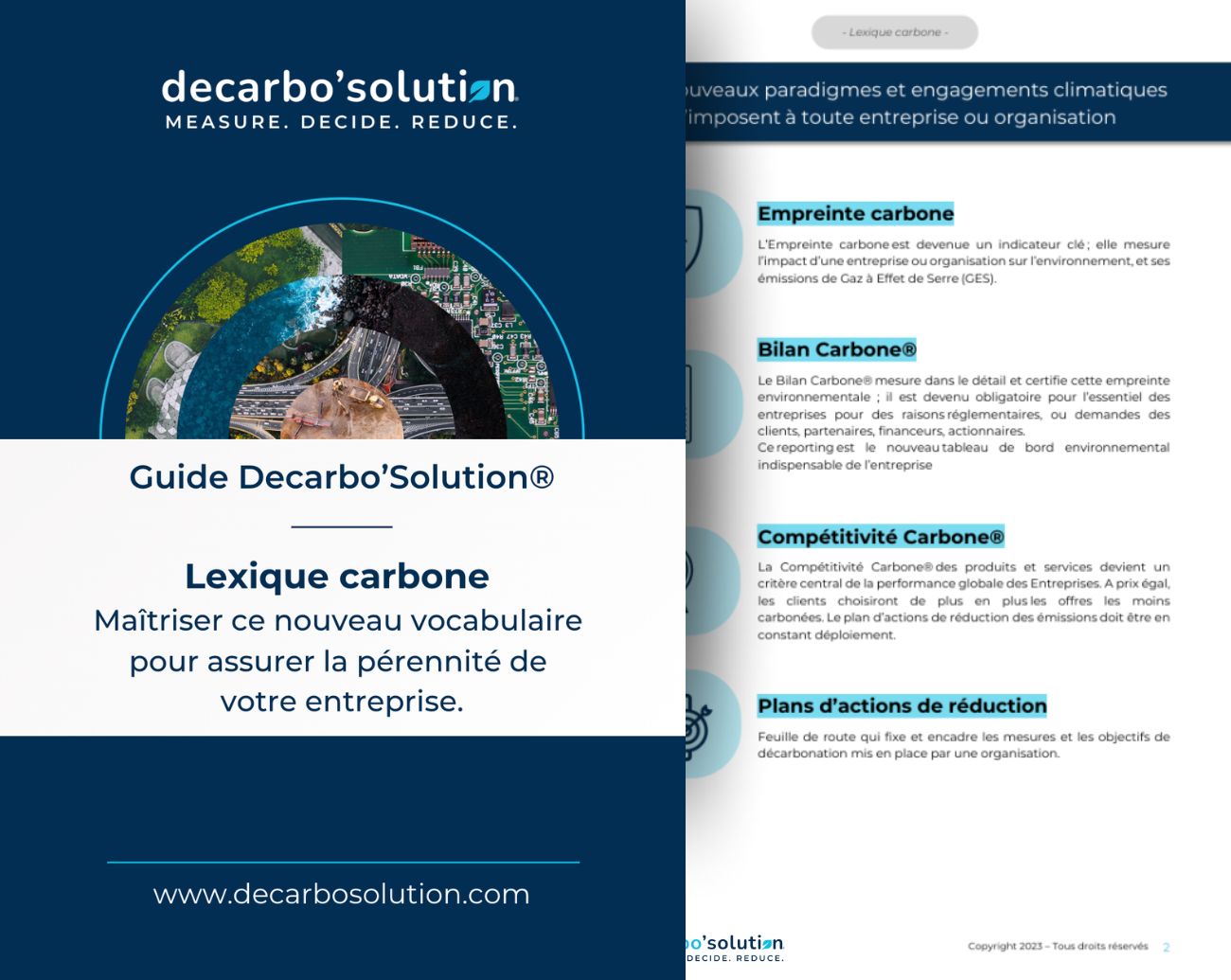
Master a new vocabulary to ensure the long-term future of your company.
QSE standards and certifications
ISO 9001 for quality
A global benchmark in quality management,ISO 9001 defines the criteria for improving customer satisfaction and ensuring reliable products/services.
ISO 14001 for the environment
The ISO 14001 provides a framework for limiting the environmental impact of a company's activities. It encourages the implementation of effective environmental management systems.
ISO 45001 for occupational health and safety
ISO 45001 is dedicated to preventing risks related to employee health and safety. It aims to reduce accidents and improve working conditions.
Implementing a QSE approach within the organization
Key steps: diagnosis, action plan, audit, and continuous improvement
Implementing a QSE approach requires several steps:
- Conduct an initial assessment to identify strengths and areas for improvement.
- Develop a structured action plan.
- Train and involve all employees.
- Conduct regular audits to measure progress and adjust actions.
The role of the QSE manager
The QSE manager coordinates strategy and monitors its implementation. He ensures compliance with standards, leads training sessions, and conducts internal audits.
The importance of team training
Without employee involvement, the QSE approach cannot succeed. Continuing education helps spread a culture of prevention, quality, and sustainability.

QSE audit: a lever for progress
Objectives and procedure of a QSE audit
The QSE audit assesses the compliance of practices with reference standards (ISO, regulations). It identifies discrepancies, proposes corrective actions, and improves overall performance.
From internal audit to certification
Internal audits serve as preparation for external audits, which, if successful, lead to certification. This official recognition enhances the company's credibility.
The concrete benefits of a QSE approach for companies
Economic performance and competitiveness
A structured and compliant organization reduces its costs related to errors, accidents, and waste. It also improves its positioning in competitive markets.
Increased safety at work
Prevention and awareness training enhance employee safety, thereby reducing absenteeism and improving motivation.
Improved image and stakeholder confidence
A QSE approach demonstrates the company's commitment to its customers, employees, and society. It becomes a differentiating factor and an asset in terms of communication.
The QSE approach and the low-carbon transition
Integrate environmental considerations into the overall strategy
QSE goes beyond compliance with standards: it encourages companies to rethink their business model by incorporating the fight against climate change.
Synergy between QSE and CSR
QSE contributes directly to CSR objectives by strengthening the company's sustainability, transparency, and social commitment.
Decarbo’Solution® et la Decarbo’Solution® : un outil innovant au service de la QSE
La QSE prend tout son sens lorsqu’elle s’articule avec des outils concrets permettant de réduire l’empreinte carbone et de piloter la transition énergétique. C’est dans cette optique que Decarbo’Solution® (Decarbo’Solution®) a développé la Decarbo’Solution®, une plateforme unique qui accompagne les entreprises dans leur stratégie bas-carbone.
Reducing your carbon footprint across all three scopes
Decarbo’Solution® helps companies measure and reduce their Scope 1, 2, and 3 emissions by involving their suppliers in a process of progress.
Optimizing economic performance and carbon costs
Thanks to an accurate assessment ofthe Carbon Tax Base®, companies can reduce their ETS quota costs by up to 30%.
Engaging suppliers in a low-carbon QSE approach
With the Decarbo’Supply® and Decarbo’Tender® modules, purchasing and tendering become real strategic levers for promoting the lowest-carbon offers.
Monitoring and management through a collaborative platform
The Decarbo’Target® module enables you to build a realistic action plan, track progress in real time, and measure the return on investment for each action.

La démarche QSE est bien plus qu’une obligation réglementaire : c’est un choix stratégique qui permet de concilier performance, sécurité et responsabilité environnementale. Combinée à des solutions innovantes comme la Decarbo’Solution®, elle devient un véritable accélérateur de transformation durable, au bénéfice de l’entreprise, de ses collaborateurs et de la planète.