










Everything you need to know about the SRI label

In a context where the financial sector is playing an increasingly important role in ecological and social transition, more and moresavers want to give meaning to their money. In France and across Europe,responsible investment has become an essential lever for directing capital towards organizations committed to sustainable growth.
The SRI certification, created by the French government, guarantees the quality and transparency of funds that incorporate ESG (Environmental, Social, and Governance) standards into their asset management strategy. By promoting a more ethical approach, it helps to strengthen the confidence of economic actors and structure a market undergoing profound transformation.
Unlike other certifications such as Greenfin, which focuses more on energy transition, SRI stands out for its comprehensive approach. It promotes equitable societal approaches, solidarity-based strategies, and exemplary management practices. Based on a rigorous methodology and precise parameters, this certification is a valuable benchmark for investors seeking to balance returns with positive social and environmental impacts.
Today, with France playing a central role in promoting ESG in Europe, SRI appears to be a key tool for transforming the investment landscape and directing flows towards a more socially responsible economy.
Contents
Definition and specific features of the SRI label
Socially Responsible Investment (SRI) was introduced in 2016 by the French Ministry of Economy and Finance. Its aim is to guarantee savers and investors that the funds concerned comply with demanding ethical investment standards. This certification is therefore a reliable benchmark in a world where sustainable finance initiatives are becoming increasingly common.
Unlike other financial distinctions, such as Greenfin, which focuses exclusively on investments related to the energy transition and the green economy, SRI takes a more comprehensive approach. It covers all issues related to sustainable development, incorporating ESG requirements: environmental, social, and organizational governance. This approach makes it possible to assess not onlythe environmental impact of companies, but also their collective responsibility and the quality of their strategic management.
SRI operates according to a "best-in-class" approach, which involves selecting the organizations that perform best in terms of ESG standards within each sector of activity, without systematically excluding certain areas. This means that a fund can invest in a variety of economic players, including in sensitive sectors, provided that they demonstrate a willingness to progress and a more committed management than their competitors.
In practice, obtaining SRI certification requires asset management companies to demonstrate a rigorous and clear methodology for selecting organizations. This requirement reinforces the credibility of the distinction and makes it a recognized tool both in France and in Europe, where demand for ethical investments is growing rapidly.
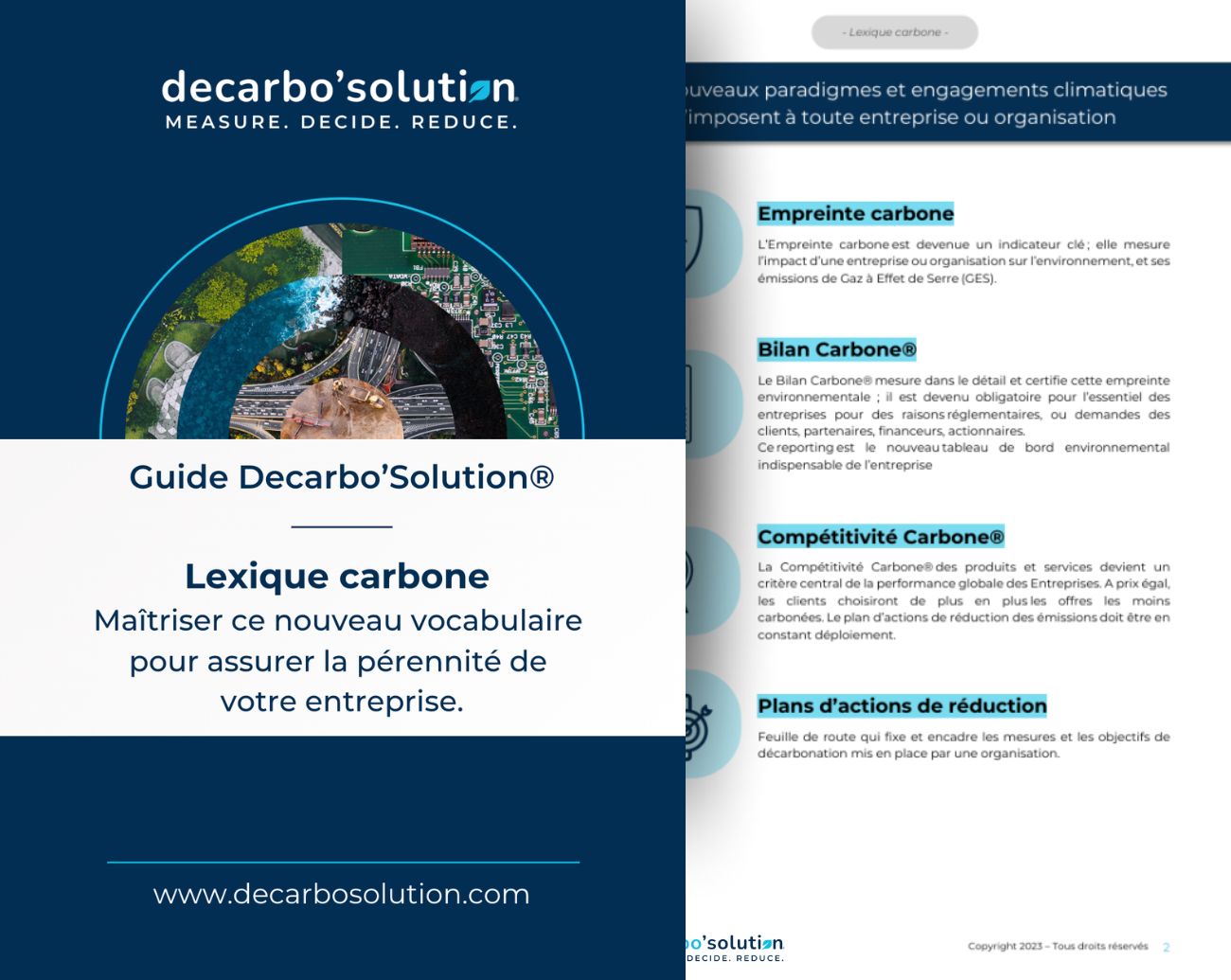
Master a new vocabulary to ensure the long-term future of your company.
The criteria and functioning of the SRI label
The certificate is awarded based on a specific methodological framework that ensures its credibility in the market. Candidate funds must demonstrate that their investment choices are based on responsible criteria, incorporating environmental, social, and governance considerations.
ESG criteria at the heart of the SRI label
This is based on ESG (Environmental, Social, Governance) requirements. These three dimensions form the basis for evaluating companies:
- Environment: reduction of greenhouse gas emissions, sustainable management of natural resources, energy transition, respect for biodiversity.
- Social: working conditions, respect for human rights, diversity and equality policies, involvement in solidarity and socially responsible projects.
- Governance: clarity in management, balance of power, business ethics, executive responsibility.
To reinforce the credibility of their climate commitments, some companies are choosing to go beyond traditional ESG criteria and commit to the SBTi (Science Based Targets initiative), which proposes emission reduction trajectories validated by scientific methodology.
The methodology for awarding the label
To obtain the SRI label, management companies must implement a clear and documented methodology. This methodology is based in particular on:
- Non-financial analysis of companies, which complements purely financial indicators.
- The "best-in-class" approach, which consists of selecting the highest-rated organizations in each sector according to ESG requirements.
- Transparency, because funds must regularly publish detailed reports to inform investors about theirinvestment choices and their impact.
This methodological approach assures investors that the certified fund follows a committed strategy.
Strengths and limitations of the system
The SRI label offers several advantages:
- It strengthens investor confidence by providing a framework that is recognized and monitored by independent bodies.
- It recognizes organizations that demonstrate responsible management and concrete efforts inESG.
- It helps to structure the sustainable finance market in France and Europe.
However, certain limitations exist:
- Methodologies vary between management companies, which can lead to a lack of consistency.
- The risk of greenwashing is sometimes pointed out if the criteria are not strictly controlled.
- Compared to labels such as Greenfin, which are more demanding in terms of environmental criteria, SRI remains broader but is sometimes considered less selective.
👉 SRI is therefore based on a combination of ESG criteria, transparent methodologies, and a best-in-class approach, making it a benchmark tool for investors seeking to combine performance with ethical finance.
Firstly, the use of GCI has enabled a significant reduction in the uncertainty of the GHG Balance, particularly for scope 3, from 50% to 5%. The Group now has 95% accurate data.
Thanks to supplier data collected and interpreted by the GCI tool, in-depth in-house analyses have been carried out on the impact of 35,000 products, grouping suppliers into 170 families. This represents +80% of purchases in mass and in euros.
The impacts and prospects of the SRI label
Beyond simply serving as a benchmark for savers, the SRI label plays a structuring role in the evolution of responsible finance. It influences investor practices and corporate strategy, and helps shape a market that is more oriented toward sustainable development.
A lever for investors and asset management
For investors, this certification is a mark of confidence. It allows them to direct their investments toward funds that meet responsible requirements and incorporate ESG issues into their strategy.
In the field of financial asset management, the label encourages a more transparent and rigorous approach. Management companies must not only demonstrate their financial performance, but also prove their commitment to sustainability. This helps to redirect financial flows towards meaningful projects.
A direct impact on businesses and governance
Obtaining SRI certification encourages the organizations in which a fund invests to adopt more environmentally responsible practices. ESG criteria require managers to strengthen their governance, improve their social policies, and become more involved in the ecological transition.
This mechanism exerts positive pressure on the economic fabric, both in France and in Europe, by favoring organizations that stand out for their sustainable management. It is therefore a virtuous circle: the more a company progresses on ESG requirements, the more it attractsresponsible investors, and the more it gains credibility on the financial market.
International challenges and prospects
Although the label originated in France, its influence now extends beyond national borders. In Europe, it is seen as a complementary tool to regulatory initiatives such as the green taxonomy and the SFDR regulation, which aim to harmonize sustainable finance.
The outlook for the future concerns:
- European harmonization, in order to make criteria comparable between countries.
- International recognition, which would enable the SRI label to become part of a global trend toward responsible finance.
- Strengthening environmental requirements to align with initiatives such as the Greenfin label, which is more selective on projects related to energy transition.
In this context, it must continue to evolve in order to remain a reliable and credible benchmark for investors and economic actors.
👉 Comme pour le label ISR, des solutions complémentaires existent pour accompagner les entreprises dans leur transition. Parmi elles, la Decarbo’Solution® développée par Decarbo’Solution®, un triptyque gagnant composé de Decarbo’Tender®, Decarbo’Target® et Decarbo’Supply®, permet aux organisations d’intégrer une approche structurée et responsable dans leur stratégie de développement durable.
The Decarbo’Commit® and Decarbo’Asset® modules enable managers to meet their non-financial reporting obligations: measuring and managing the overall carbon footprint of their holdings.

In just a few years, the SRI label has established itself as a key tool for responsible finance in Europe. By incorporating ESG (environmental, social, and governance) requirements, it helps direct financial flows toward companies committed to sustainable development and more transparent management.
For investors, it provides a reliable benchmark in a rapidly changing market, ensuring that theirinvestment choices are based not only on financial performance, but also on social and environmental values. For organizations, it represents a lever for credibility and differentiation, encouraging them to adopt more socially responsible and sustainable practices.
However, SRI must continue to evolve in order to respond to criticism regarding the heterogeneity of methodologies or the risk of greenwashing. In a context where sustainable finance is being structured at the European level, it appears essential to strengthen the harmonization of criteria and ensure better comparability between different labels, such as Greenfin.
Au-delà du label ISR, les organisations ont besoin d’outils pratiques pour mettre en œuvre leur stratégie climat et RSE. C’est dans cette logique que Decarbo’Solution® a développé la Decarbo’Solution®, un triptyque gagnant composé de Decarbo’Tender®, Decarbo’Target® et Decarbo’Supply®, qui accompagne les acteurs économiques dans la construction d’une trajectoire bas carbone et les outils de suivi et pilotage d’empreinte Decarbo’Commit® et Decarbo’Asset® pour les gestionnaires
In short, SRI perfectly illustrates how finance can become a driver of sustainable development, provided that it remains demanding, transparent, and constantly evolving.