









Why methane accelerates global warming

Methane is often overshadowed by carbon dioxide when it comes to global warming. However, this greenhouse gas is more than 80 times more potent than CO₂ over a twenty-year period. Invisible, odorless, and difficult to control, it acts as a silent accelerator of climate change, making the fight against global warming even more complex.
Although present in much smaller quantities in the atmosphere, methane effectively traps heat emitted by the Earth, thereby reinforcing the natural greenhouse effect. It has many sources: decomposition of organic matter, wetlands, livestock farming, natural gas extraction, and waste management. This combination of natural and human emissions explains why the concentration of methane in the atmosphere has more than doubled since the pre-industrial era.
To fully understand its role, it is essential to understand the definition of carbon and the mechanisms associated with the carbon cycle. This provides a better understanding of the interactions between greenhouse gases and their impact on the climate. Without this understanding, it is difficult to identify effective levers for action to reduce our climate footprint.
Today, every ton of methane emitted into the atmosphere amplifies the rise in temperatures and exacerbates extreme weather events such as droughts, heat waves, and weather disturbances. Reducing these emissions is therefore one of the fastest and most concrete ways to combat global warming in the short term.
Face à cet enjeu, les organisations doivent intégrer la gestion du méthane dans leurs stratégies de décarbonation. En s’appuyant sur des informations précises, des outils de mesure fiables et des approches globales comme celles proposées par Decarbo’Solution® à travers la Decarbo’Solution®, il devient possible d’identifier, réduire et piloter les émissions de manière cohérente et mesurable.
This article looks at the origins, effects, and levers of action related to methane, in order to understand why this gas plays a central role in accelerating global warming—and how we can collectively limit its impacts.
Contents
Methane, a little-known gas with a big impact on the climate
What is methane? Definition and natural sources
Methane (CH₄) is a particularly powerful greenhouse gas that has been naturally present in the atmosphere for millions of years. It is mainly formed by the decomposition of organic matter in oxygen-poor environments, such as wetlands or frozen permafrost soils. This biological process, known as methanogenesis, is central to the natural carbon cycle.
However, since the beginning of the industrial era, human activities have significantly increased the amount of methane emitted into the atmosphere. Agriculture, livestock farming, waste management, fossil fuel exploitation, and leaks in natural gas networks are all sources that have caused the concentration of this gas to skyrocket.
According to the IPCC report, methane currently contributes to around 30% of global warming. Its lifespan in the atmosphere is short (around 10 years), but its warming potential is more than 80 times greater than that of carbon dioxide over a 20-year period.
This means that rapidly reducing methane emissions is one of the most effective actions we can take to slow global warming in this decade.
A greenhouse gas much more powerful than carbon dioxide
While carbon dioxide acts slowly but sustainably, methane produces a rapid and intense greenhouse effect. By trapping more heat, it unbalances the global average temperature and disrupts natural climate cycles.
Each ton of methane emitted has a direct impact on short-term warming, making it a priority lever for any climate strategy.
The sectors that emit the most—agriculture, energy, and waste management—already have technical solutions to limit emissions or recover captured methane. For example, gas from organic matter can be fed back into the grid as a renewable energy source.
Methane also acts as an indicator of our overall footprint: it reveals the flaws in our production systems and the difficulty of achieving carbon neutrality . Companies and communities that manage to control it are taking a decisive step toward reducing their overall environmental impact.
Alarming figures and the urgent need for action
The latest data confirm a worrying trend: atmospheric methane concentrations are now reaching record levels, never seen before in over 800,000 years. Global emissions are estimated at around 580 million tons per year, nearly two-thirds of which are man-made.
Intensive livestock farming, the decomposition of organic waste, natural gas production, and leaks in energy infrastructure are the main causes of this increase. These emissions contribute to raising the average temperature of the planet, but also to worsening air pollution, as methane interacts with other gases in the troposphere.
Reducing methane means taking action for both the climate and air quality. It is also a concrete way to improve theecological footprint of human activities, particularly in the energy and agricultural sectors.
The challenge is twofold: environmental and economic. A significant portion of emissions are avoidable losses, particularly in the natural gas sector. By reducing these leaks, companies not only lower their emissions, but also their operating costs.
Finally, in a context where the fight against greenwashing is becoming essential, players who are genuinely committed to reducing methane demonstrate measurable environmental authenticity —far from superficial rhetoric.
In summary, methane is an accelerator of global warming, a discreet but devastating gas in the short term. Understanding its mechanisms means identifying a major lever for action to reduce emissions, strengthen the credibility of climate strategies, and move towards a more sober, resilient, and eco-responsible economy.
Why methane accelerates global warming
A gas at the heart of human activities
Methane is notable for its presence in many economic sectors. Its production is not solely natural: it stems directly from our lifestyles and production methods. Agriculture, intensive livestock farming, natural gas exploitation, and industrial infrastructure are all sources of diffuse but persistent emissions.
Agricultural activities are the leading cause of methane emissions worldwide. Enteric fermentation in ruminants, rice cultivation, and the decomposition of organic matter in waterlogged soils release significant amounts of methane. Meanwhile, the extractive and energy industries generate methane during the exploitation of fossil fuel deposits or due to leaks in transport networks.
This network of multiple emissions makes methane management complex. Every ton released has an immediate effect on the atmosphere, as this gas traps heat with formidable efficiency. It is this reactivity that makes it a key factor in accelerating global climate change.
An amplifying effect on Earth's temperature
Methane has one key property: it effectively absorbs infrared radiation emitted by the Earth. In other words, it prevents heat from escaping into space. This amplifies the temperature of the troposphere, alters air mass circulation, and disrupts the water cycle.
Its presence at high altitudes also interacts with other atmospheric compounds, contributing to the formation of tropospheric ozone, a gas that is harmful to health and ecosystems. This phenomenon exacerbates global thermal imbalance, promoting extreme weather events and disruptions in seasonal cycles.
Researchers emphasize that by acting on methane, we can directly influence the speed of the change underway. A rapid decline in methane emissions could stabilize global temperatures over a few decades, a shorter timeframe than that for CO₂.
Avoidable sources: understanding to better reduce
A large proportion of methane emissions are now technically avoidable. Leaks in gas infrastructure, gas flaring at extraction sites, and inefficient management of organic matter can be corrected using proven technologies and more sustainable practices.
In the natural gas production sector, for example, identifying and repairing leaks can significantly reduce losses while improving economic profitability. Similarly, recovering biogas from wetlands or organic matter is a virtuous alternative: the methane captured becomes a usable resource rather than a pollutant.
Finally, changes in agricultural practices play a decisive role. Adjusting animal feed, covering the soil with vegetation, and managing effluents in a controlled manner canreduce emissions without compromising productivity. These solutions demonstrate that a realistic transition is possible, provided that it is supported and measured.
Towards responsible methane management
Reducing methane emissions is not just an environmental constraint. It is also an opportunity to push the boundaries of the current industrial model and improve companies' environmental performance.
The most advanced organizations are seeking to quantify their indirect emissions, particularly those from their supply chains. This approach is part of a comprehensive strategy focused on responsibility and transparency.
C’est précisément cette vision que promeut Decarbo’Solution® : accompagner les acteurs économiques dans la compréhension, la mesure et la baisse de leurs émissions sur l’ensemble de leurs activités. En adoptant une approche structurée, collaborative et mesurable, il devient possible de réduire durablement l’influence du méthane sur l’équilibre atmosphérique — tout en améliorant la neutralité carbone globale des organisations.
In short, methane acts as a short-term accelerator of environmental disruption. Reducing methane emissions is the fastest way to slow global warming, even before long-term policies take effect. Companies that incorporate this dimension into their environmental strategy are not just complying with their obligations: they are investing in sustainability and future competitiveness.
Our carbon footprints show that the biggest impacts of our events are linked to spectator and participant travel, as we organize popular "off-stadium" competitions.
Reducing methane: a key lever for carbon neutrality
Understanding the central role of methane in our systems
Methane occupies a unique place in our economic and energy models. Its presence in supply chains, transportation systems, and industrial processes makes it both useful and problematic.
This highly flammable gas is often handled under pressure in controlled environments, particularly inthe fossil fuel industry. However, even outside of energy infrastructure, it remains present in other sectors such as agri-food and chemicals.
The organic origin of methane makes it ubiquitous in nature: it forms as soon as living matter decomposes without oxygen. But this process intensifies in artificial environments created by humans. Today, tens of millions of tons of methane are emitted each year around the world, much of it linked to our modern lifestyles.
Understanding methane means understanding the link between human activity and global balance. Controlling it no longer depends solely on public policy: it is becoming a strategic issue for companies keen to anticipate new environmental requirements and secure their value chains.
Acting at the source: rethinking our industrial models
One of the major challenges lies in transformingindustrial processes. Methane is involved in multiple stages of the chain, from the extraction of fossil resources to the processing of chemicals.
In many cases, losses are not the result of human error, but of outdated operating methods designed at a time when climate and energy constraints were not as pressing.
Today, technological innovation offers concrete solutions: real-time monitoring, detection sensors, improved seals and valves subject to high technical constraints, and gas recovery for internal use.
These levers make it possible to limit the risk of ignition, optimize safety, and reduce economic losses.
But acting at the source also means changing industrial practices: moving from a short-term exploitation model to one based on efficiency and sustainability.
Companies that commit to this are changing their practices and becoming more competitive in a context where environmental performance is becoming an essential selection criterion.
Decarbo’Solution®: driving transformation with a methodical approach
Pour passer du constat à l’action, les organisations doivent disposer d’outils capables de traduire leurs engagements en trajectoires mesurables.
C’est précisément l’objectif de la Decarbo’Solution® développée par Decarbo’Solution® : une approche intégrée qui permet d’analyser, planifier et suivre les progrès réalisés dans la lutte contre le méthane et les autres gaz à effet de serre.
Based on a complementary triptych — Decarbo’Target®, Decarbo’Supply®, and Decarbo’Tender® —this methodology helps companies build a credible trajectory:
- Decarbo’Target® defines priority areas for action and simulates their future impact, based on the most realistic transition scenarios.
- Decarbo’Supply® involves suppliers in identifying levers for progress and accurately measuring upstream contributions, promoting transparency and collaboration.
- Decarbo’Tender® rewards the most responsible partners in tenders, introducing the notion of carbon positive discrimination®, a pioneering concept to encourage environmental competitiveness.
This system is based on international standards (ISO 14064, ISO 14067, GHG Protocol) and rigorous reporting, enabling organizations to compare their actual trajectory with their reduction targets defined according to the Science Based Targets (SBTi) methodology.
Beyond measurement, Decarbo’Solution® acts as a true strategic framework: it transforms data into decisions, commitments into results, and aligns the actions of technical, purchasing, and CSR departments around a single objective.
Towards a controlled and shared transition
The issue of methane is not solely scientific: it is cultural and collective.
Changing our management practices requires involving all stakeholders—manufacturers, local authorities, suppliers, and consumers—in a process of continuous improvement. This collaborative approach is essential to maintaining a sustainable and realistic low-carbon trajectory based on transparency and measurement.
Avec la Decarbo’Solution®, Decarbo’Solution® propose une démarche qui combine pragmatisme et rigueur scientifique, fondée sur la compréhension fine des mécanismes d’émission, mais aussi sur la volonté d’améliorer la compétitivité environnementale des organisations.
The results are tangible: the companies supported are gaining visibility, better controlling their supply chains, and adopting more sustainable operating methods. This gradual but structured transition is paving the way for an economy in which methane, once a symbol of dependence, is becoming a lever for transformation and sustainable innovation.
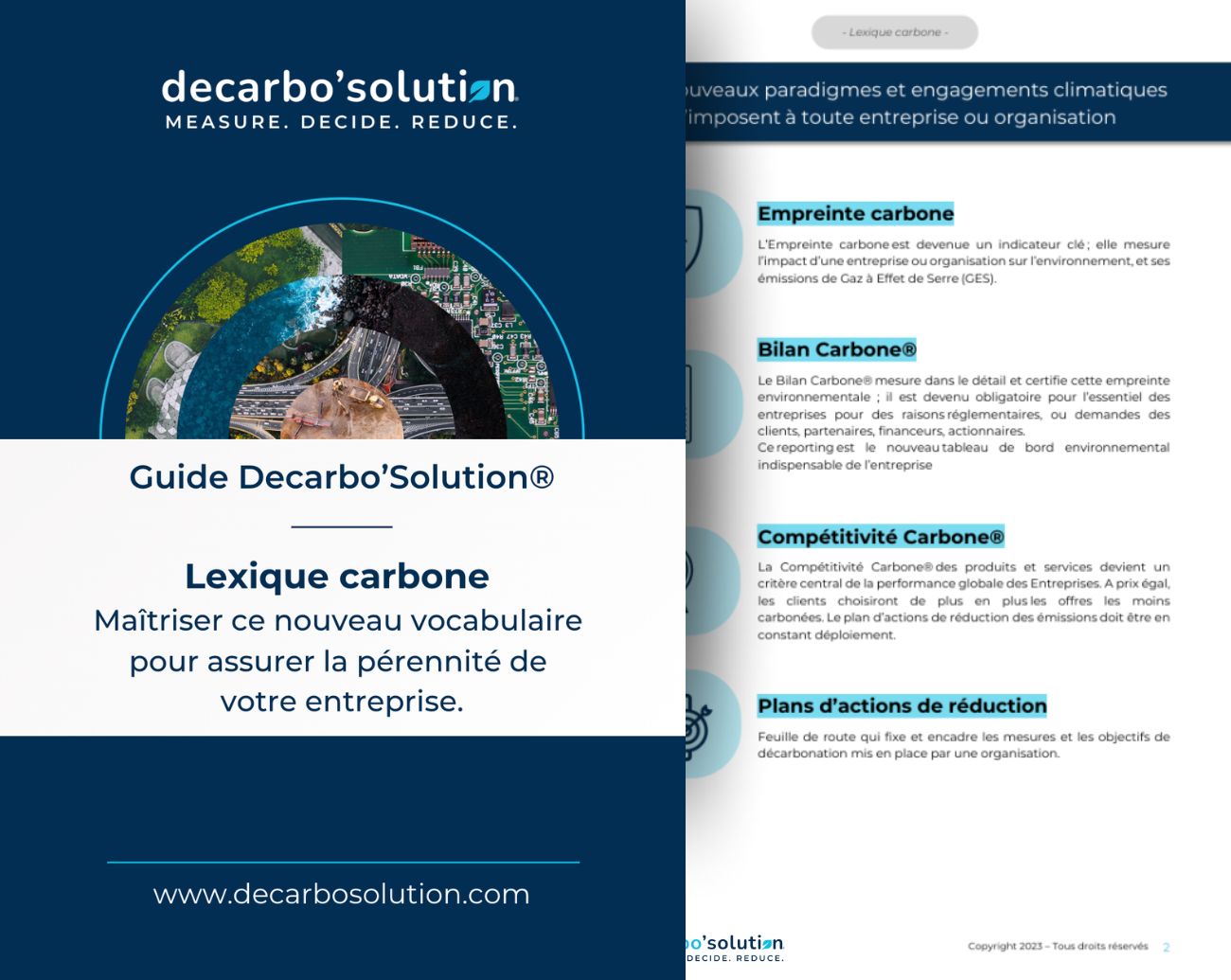
Master a new vocabulary to ensure the long-term future of your company.
Towards a sustainable economy: acting now to ease the pressure on the planet
A necessary turning point for our models
Recent environmental changes remind us that our economic systems are operating at the limits of their physical capacity.
The increasing scarcity of resources, dependence on fossil fuels, and growing regulatory constraints underscore the need for structural change.
Whether they are industrial, logistics, or service companies, businesses can no longer be content with one-off adjustments: they must rethink their entire operating model.
Methane is a powerful symbol of this. A highly flammable gas, often stored under pressure and produced by organic processes, it illustrates the fragility of a model based on energy-intensive, linear processes.
Limiting its release means both protecting natural balances and strengthening industrial stability. It is also a step towards more sustainable models that combine economic performance with collective responsibility.
The drivers for action: innovation and rigor
To evolve their practices, companies must rely on solid technical and organizational levers.
In the chemical and industrial sectors, innovation is a key driver:
- improvement of high-pressure processes,
- decreases in areas sensitive toinflammation,
- more efficient conversion of organic matter.
These developments are not limited to technical measures; they reflect a cultural shift. The challenge is no longer just to limit losses, but to design systems capable of learning, anticipating, and evolving.
This requires rigorous data monitoring, increased transparency, and close coordination between internal and external stakeholders.
Les solutions numériques, comme celles développées par Decarbo’Solution®, offrent à ce titre une aide stratégique précieuse : elles permettent d’objectiver les résultats, de mesurer la progression et d’identifier les priorités de transformation, sans se limiter à une vision théorique ou administrative.
A collective and sustainable vision for the future
The transition can only be successful if it is based on cooperation and consistency.
Every stakeholder—whether an industrialist, supplier, institution, or consumer—has a part to play in the solution.
Individual efforts are no longer enough: coordination between sectors and territories is what will enable a virtuous circle to be established.
Shared initiatives, data exchanges, and the pooling of best practices pave the way for a more resilient economy, capable of reconciling innovation and moderation.
This collaborative dynamic builds trust, reduces adaptation costs, and accelerates the dissemination of proven solutions.
Methane, long perceived as a by-product of our activities, is thus becoming a sign of collective maturity: knowing how to control it proves that a modern industry can combine technical rigor, safety, and sustainability.
Every ton avoided or recovered demonstrates our societies' ability to bring together scientific intelligence, innovation, and responsibility.

Methane, long overlooked in public debate, is now emerging as a key indicator of our ability to transform our economic and environmental models.
A highly flammable gas produced by organic processes and present in most industrial chains, it embodies the great paradoxes of our time: useful but risky; abundant but difficult to control; essential but dangerous under pressure.
Son influence rapide sur l’équilibre atmosphérique en fait un levier prioritaire d’action.
Agir sur le méthane, ce n’est pas seulement réduire une source d’instabilité, c’est rétablir une cohérence entre croissance, responsabilité et résilience.
Cette démarche exige à la fois rigueur scientifique, coordination entre acteurs et volonté stratégique — trois dimensions que Decarbo’Solution® place au cœur de son approche.
Thanks to Decarbo’Solution®, companies now have a clear framework for understanding, managing, and measuring their progress.
This method, based on transparency, collaboration, and accurate, verified information, offers a dynamic vision of the transition: it allows environmental performance to be integrated into operational decisions, efforts to be recognized, and sustainable, credible trajectories to be built.
But beyond the tools, success depends above all on a mindset: that of shared transformation.
Each player—whether industrial, institutional, or citizen—holds a piece of the solution. Together, they can make methane a tipping point toward a balanced development model, where innovation and responsibility advance hand in hand.
C’est cette conviction qui guide Decarbo’Solution® : accompagner le passage à l’action avec méthode, précision et sens, pour que chaque décision prise aujourd’hui contribue à alléger la pression sur la planète de demain.